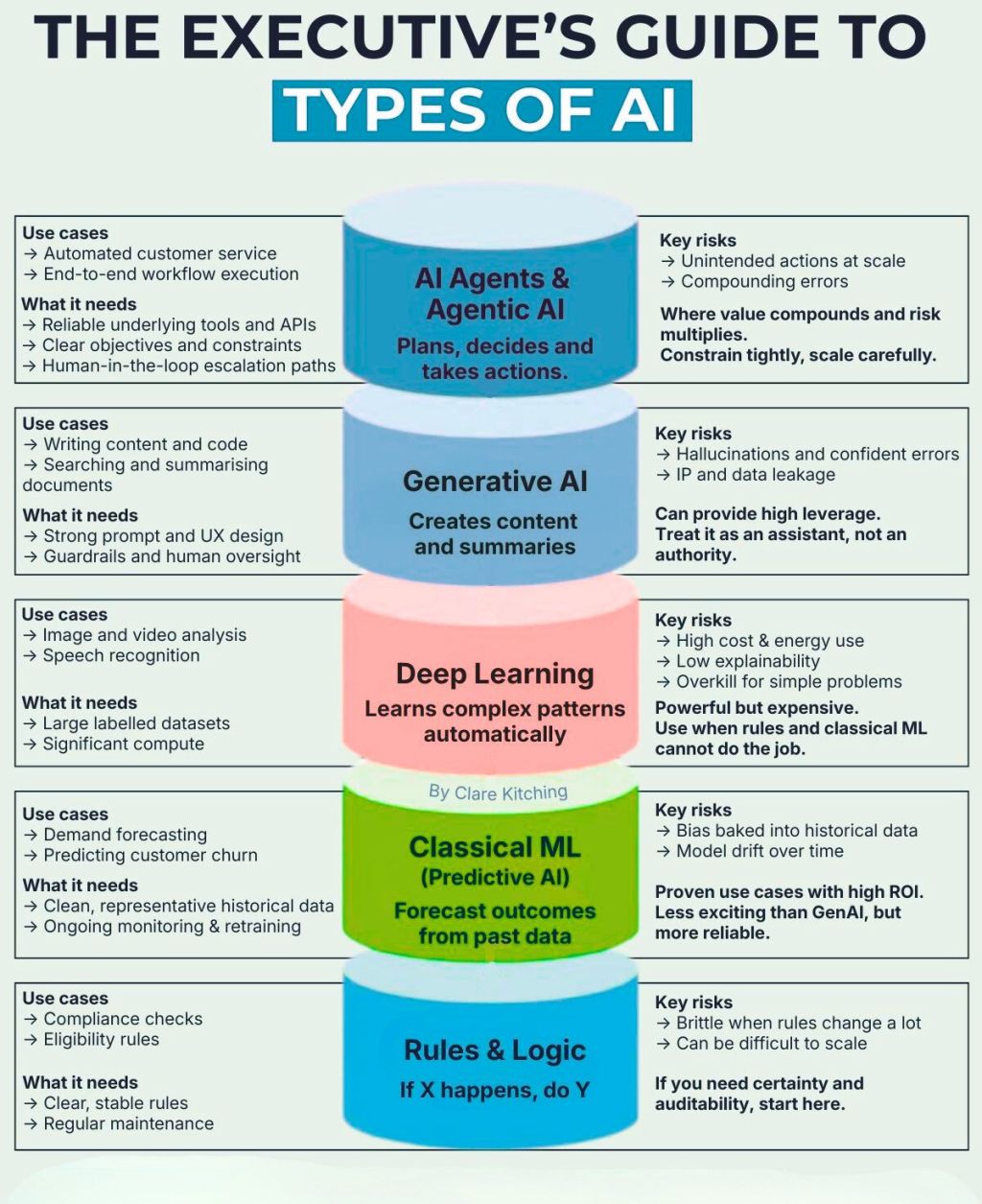
One of the most important takeaways from the post at the link below is that the highest-return AI initiatives are often the least glamorous. While headlines and boardroom conversations gravitate toward generative AI demos and autonomous agents, the real value frequently sits lower in the stack-rules engines, predictive models, and disciplined automation of repeatable decisions. Too many organizations leap to the most visible layer of AI without first exhausting simpler, proven approaches that can drive measurable gains in 90 days or less. The result is millions spent on pilots that look impressive but fail to scale, while straightforward forecasting, pricing logic, or compliance automation quietly offer durable margin improvement and operational lift.
The author’s most powerful insight is reframing AI not as a single transformative bet, but as a managed portfolio of capabilities that must mature over time. Rules-based systems provide clarity and auditability. Predictive models deliver reliable ROI in areas like demand forecasting and churn reduction. Deep learning and generative AI add power and leverage – but only when supported by strong data foundations, governance, and human oversight. Agents introduce autonomy, which increases both upside and risk. The discipline lies in starting with the simplest solution that solves the problem, layering in complexity only when it earns its place. In AI strategy, restraint and sequencing outperform excitement, and sustainable value compounds when the right tool is matched to the right job.
 Sean O'Neill's Blog